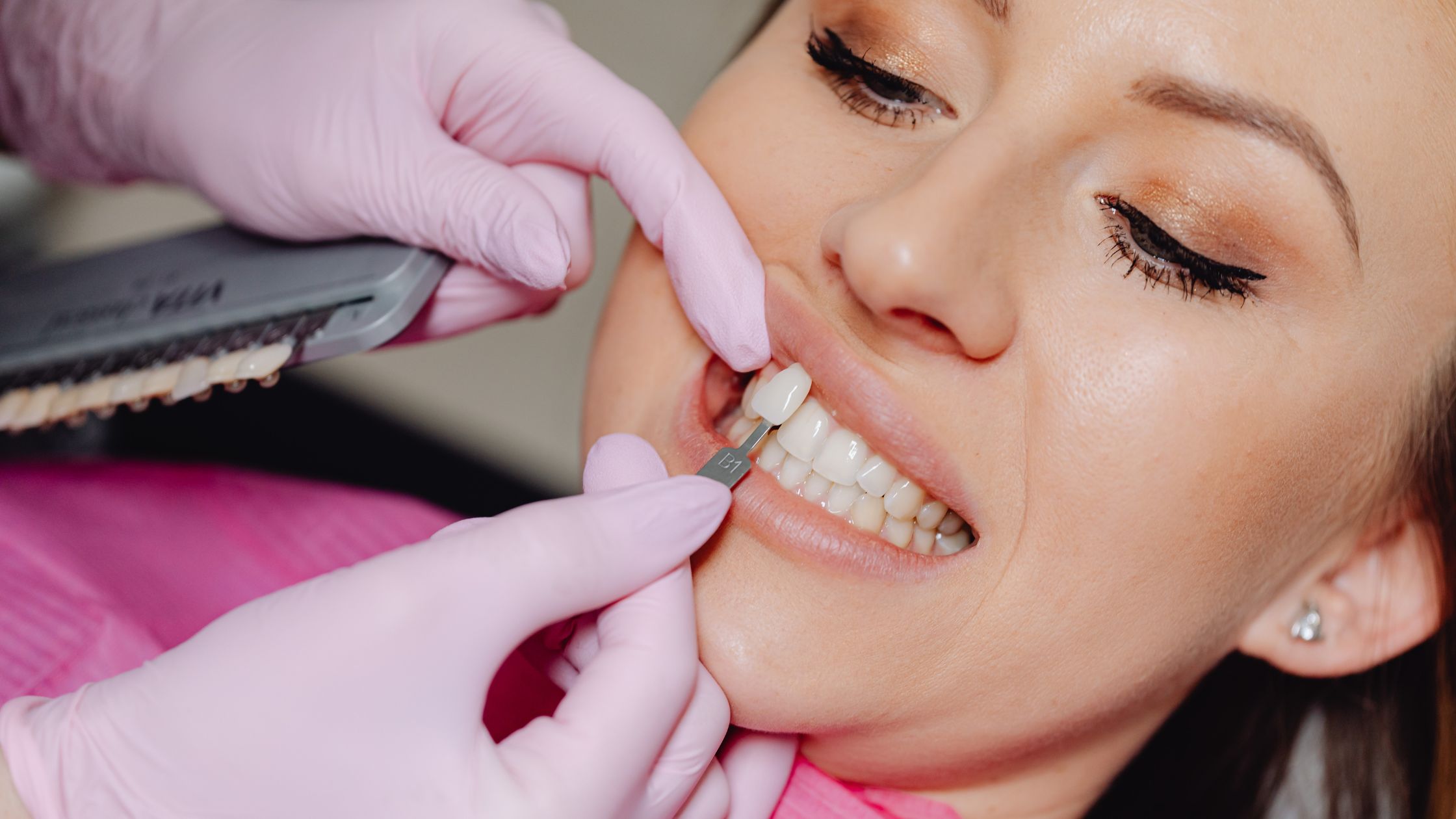
A Quick Reality Check Before We Start
A lot of people first hear about dental veneers and assume they are a quick perfect smile fix for everything: chips, stains, gaps and even missing teeth.
But in reality veneers dental treatments are more specific than that. They work well for cosmetic improvements but they are not suitable for every dental problem.
Once you understand the types, cost, procedure and advantages plus the limitations it becomes much easier to decide if they are right for you.
1. Types of Dental Veneers
When people ask “what are dental veneers?” – the answer actually depends on the material used. Each type has a different balance of cost, durability and appearance.
Porcelain Veneers
Porcelain veneers are the most commonly recommended for long term cosmetic results.
- Designed to mimic natural enamel
- Highly stain resistant coffee and tea do not easily affect them
- Last around 10 to 15 years with good care
- Best for a natural undetectable finish
They are usually considered the premium option in veneers dental treatments.
Composite Veneers
Composite veneers are made from tooth coloured resin and applied directly to the teeth.
- Usually completed in a single visit
- More affordable upfront
- Less durable than porcelain
They are often chosen by people wanting a faster or budget friendly option.
Minimal Prep or No Prep Veneers
These require little or no enamel removal.
• More conservative approach
• Suitable for select cases only
• Not always possible depending on tooth structure
2. Dental Veneers Cost: What You Are Really Paying For
One of the most searched questions is how much do dental veneers cost.
The answer depends on material complexity and number of teeth.
Typical Price Range
• Porcelain veneers cost approximately 1100 to 2000 dollars per tooth
• Composite veneers cost over a few hundred dollars per tooth
Why Costs Vary
The dental veneers cost is not fixed because it depends on
- Type of veneer chosen
- Number of teeth treated
- Dentist skill and location
- Customisation required for smile design
- Type of tooth and its anatomy
Important Cost Considerations
- Most insurance plans classify veneers as cosmetic
- To ease your expenditure, you can enquire about payment plans or interest free options
So while veneers can be an investment they are also highly flexible depending on budget.
3. Procedure What Actually Happens Step by Step
Understanding the process helps remove most of the fear around it.
Step 1: Consultation and Assessment
Your dentist checks oral health first including gum health, any tooth decay and bite alignment.
At this stage a digital smile preview may be created so you can see expected results.
Step 2: Tooth Preparation
A very thin layer of enamel approximately 0.5 mm is gently removed.
• Done to ensure veneers sit naturally
• Local anaesthesia is used for comfort
Step 3: Impressions or Digital Scanning
For porcelain veneers a mould or digital scan is sent to a dental lab.
Temporary veneers may be placed while the final set is made.
Step 4: Bonding the Veneers
Once ready, veneers are bonded using dental cement and hardened with a special light.
This is the step where the visible transformation happens.
4. Advantages of Dental Veneers
People choose veneers dental treatments for more than just appearance.
Aesthetic Improvement
Veneers can correct
• Discolouration
• Chips and cracks
• Uneven shape
• Small gaps
Instead of multiple treatments, one solution improves overall smile symmetry.
Long Term Durability
Porcelain veneers can last over a decade with proper care making them a long-term cosmetic solution.
Stain Resistance
Unlike natural teeth, porcelain resists staining from common foods and drinks.
Confidence Boost
Many patients report improved self-esteem and comfort in social situations after treatment.
Maintenance Tips to Keep Veneers in Good Condition
Maintenance plays a huge role in how long veneers last.
Daily Care
• Use non-abrasive toothpaste
• Brush and floss regularly
• Maintain good gum health
Habits to Avoid
• Biting hard objects like ice, pens, fingernails
• Using teeth as tools
• Excessive force while chewing
Professional Care
• Dental check-ups every 6 months
• Monitoring the edge where veneer meets tooth
Disadvantages and Limitations Important to Know
Veneers are effective but not reversible or suitable for everyone.
Irreversibility
Once enamel is removed the process cannot be undone.
Sensitivity
Some patients may experience temporary sensitivity to hot or cold after the procedure.
Not Suitable for Every Case
• People with active gum disease must treat it first
• Teeth grinding bruxism can damage veneers
• Dental veneers for missing teeth are not a solution; dentures, implants or bridges are required instead
Are Dental Veneers Right for You
Dental veneers offer a powerful combination of cosmetic improvement and long-term durability. Understanding the types, cost, procedure, advantages, maintenance and disadvantages helps set realistic expectations before committing.
They work best for people looking to improve smile appearance, not replace missing teeth or fix major dental health issues.
If you are considering veneers the best next step is a professional consultation to see what is realistically achievable for your smile and budget.