Everyday Care
What does stage 1 gum disease (gingivitis) look like? Early signs and care in Shellharbour
Learn what early gingivitis can look like, how it differs from periodontitis and what to expect from a gum assessment in Shellharbour.
25 November 2026
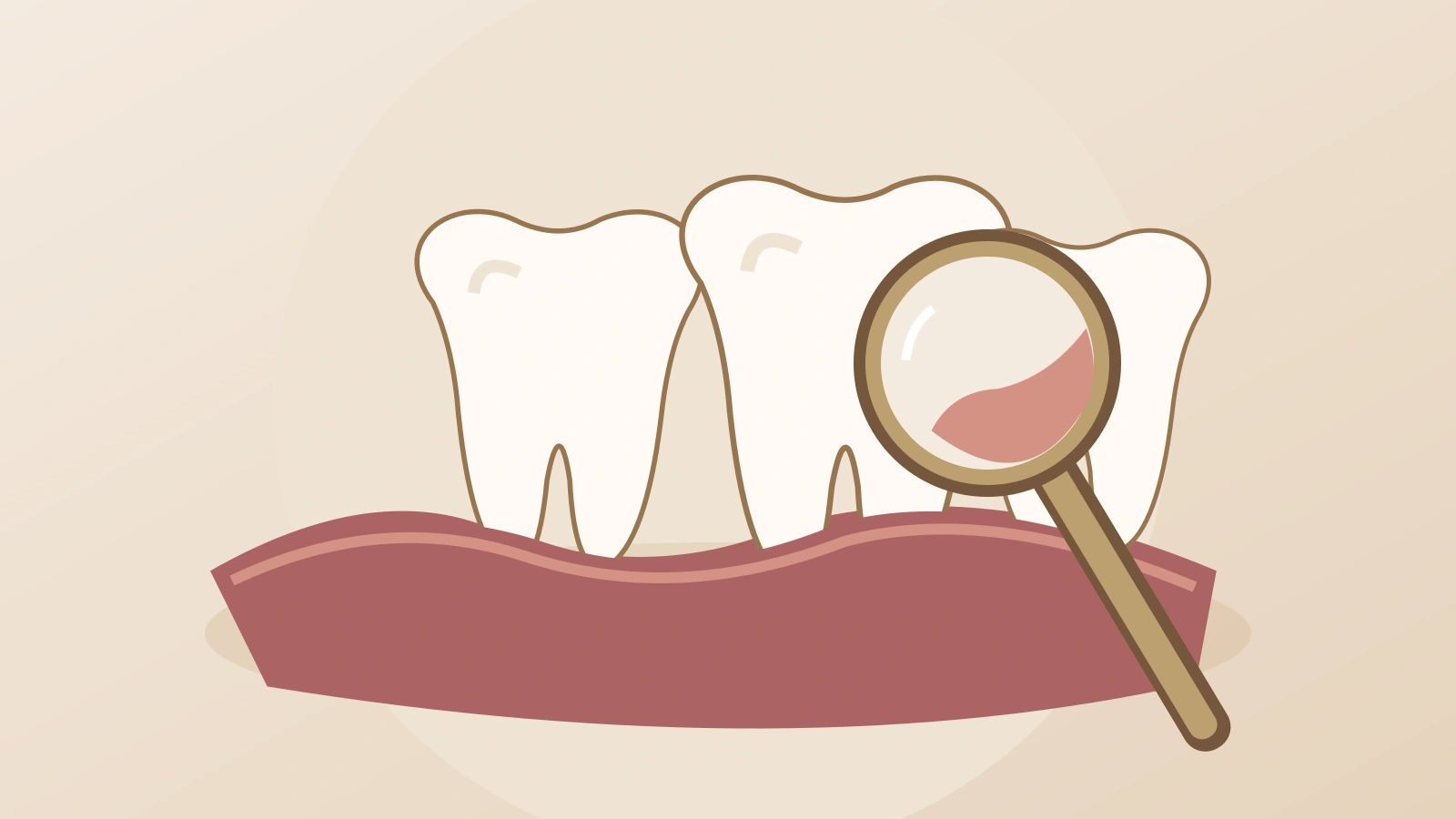
Early gum disease can look like a red or puffy edge where the gums meet the teeth. You may see blood when brushing, cleaning between teeth or eating, even when your gums feel comfortable. Bad breath, an unpleasant taste or tenderness can also occur. Healthdirect's guide to gingivitis explains that plaque along the gum line can irritate the gums. A dentist can check whether gingivitis or something else is causing the change.
If you have searched for stage 1 gum disease, you are probably looking for gingivitis, the early form of gum disease. Dentists also use stages to describe the severity of periodontitis. That is a different diagnosis involving damage to the tissues that support the teeth. The distinction matters because it changes what the dentist looks for and what care may be needed.
Where to look for early signs
Start at the edge where the gum meets the tooth. In gingivitis this margin can look redder or fuller than the gum nearby. The gum between teeth may look swollen, and the area may feel tender when you clean it. Look for a change from your usual gum colour and shape. Some changes are easier to notice while brushing than in a mirror. The Australian Dental Association's gum diseases guide describes swelling, redness and easy bleeding as common signs.
Think about what has changed alongside the appearance. If you have noticed an unpleasant taste, gum soreness or new tooth sensitivity, mention it when you book. A tooth that feels loose, gums that have pulled back, or new spaces between teeth also deserve an assessment. If a denture starts to fit differently or your bite feels different, tell your dentist so they can check the cause. A photo can help you describe a change over time, but a dentist needs to examine the gums to tell which tissues are affected.
How gingivitis differs from periodontitis
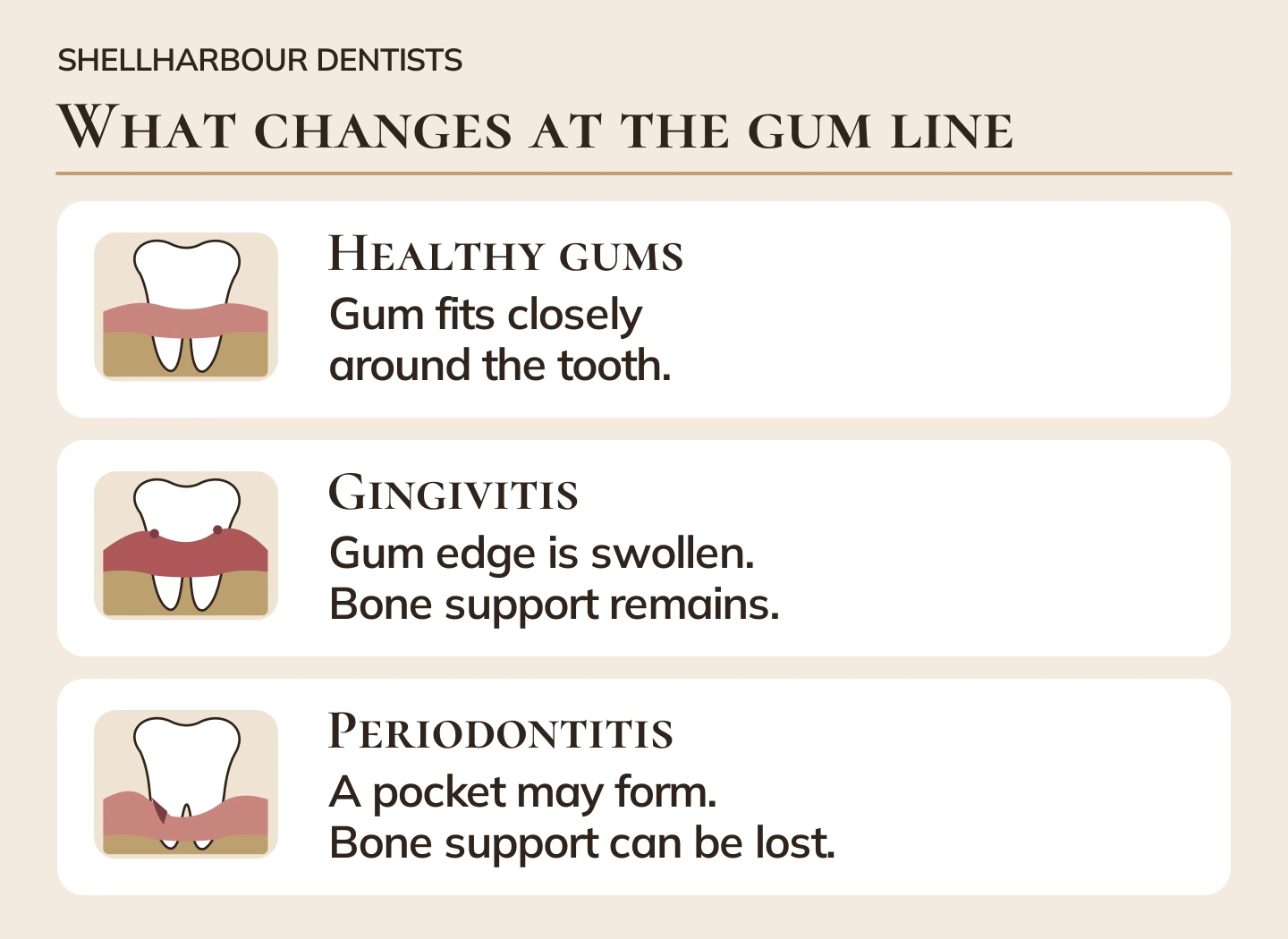
With gingivitis, inflammation is in the gums. In periodontitis, the tissues and bone that hold teeth in place can be damaged. The gums can pull away from a tooth and form a pocket. Because some changes are below the gum line, the Australian Dental Association notes that periodontitis often causes little obvious discomfort. Its signs can overlap with gingivitis, which is one reason bleeding alone cannot tell you how far the condition has progressed.
- Healthy gums tend to fit closely around the teeth. Look for changes in the gum edge and let a dentist assess persistent bleeding or swelling.
- Gingivitis affects the gum tissue. The gum edge may become swollen or red and may bleed easily. Professional plaque and calculus removal and daily cleaning can help manage the inflammation.
- In early periodontitis, loss of support may already be present. The dentist can assess for pockets and changes in bone even when the tooth still feels firm.
- With moderate or advanced periodontitis, more support may be lost. Teeth may shift or loosen, the gums can pull back and biting can become tender. In more severe disease, abscesses or tooth loss can occur.
A finding of periodontitis changes the care discussion. The ADA treatment guide describes a stepwise plan based on the examination. It may include advice on home cleaning, treatment below the gum line and reassessment. The dentist can explain what they found, whether further treatment or referral is needed and when to review the gums.
If you are trying to make sense of a stage number, ask which tooth or area it refers to and what the examination showed. You can ask the dentist to point out the gum line, show where the probe measured a space, and explain what they can see on any X-rays. Ask which findings reflect current inflammation and which reflect a change in support. The colour you see at home is only one part of that assessment.
Why the gum edge becomes inflamed
Plaque is a layer of bacteria that collects on teeth. When it builds up where the tooth meets the gum, it can irritate the tissue. Plaque that stays in place can harden into calculus, also called tartar. A dental professional can remove calculus. A soft brush and cleaning between the teeth help remove the softer film that builds up day to day. Healthdirect explains the difference and what treatment involves.
Smoking, diabetes and a family history of periodontitis can increase the risk of gum disease. Tell the dentist if you have diabetes, smoke, or take medicines that leave your mouth dry or change how your gums feel. Some medicines can affect the mouth, and the dentist can take that into account alongside what they see. Bring a current medicine list so you can discuss the changes together. Better Health Channel's guide to teeth and medication explains these effects.
The relationship between diabetes and gum health can go both ways. The Australian Dental Association's diabetes guide explains why it matters to discuss diabetes management and gum health with the people looking after you. A balanced diet is part of looking after your mouth alongside daily cleaning and dental care. Better Health Channel's gum disease guide covers everyday prevention and when to seek help.
A daily cleaning and assessment guide
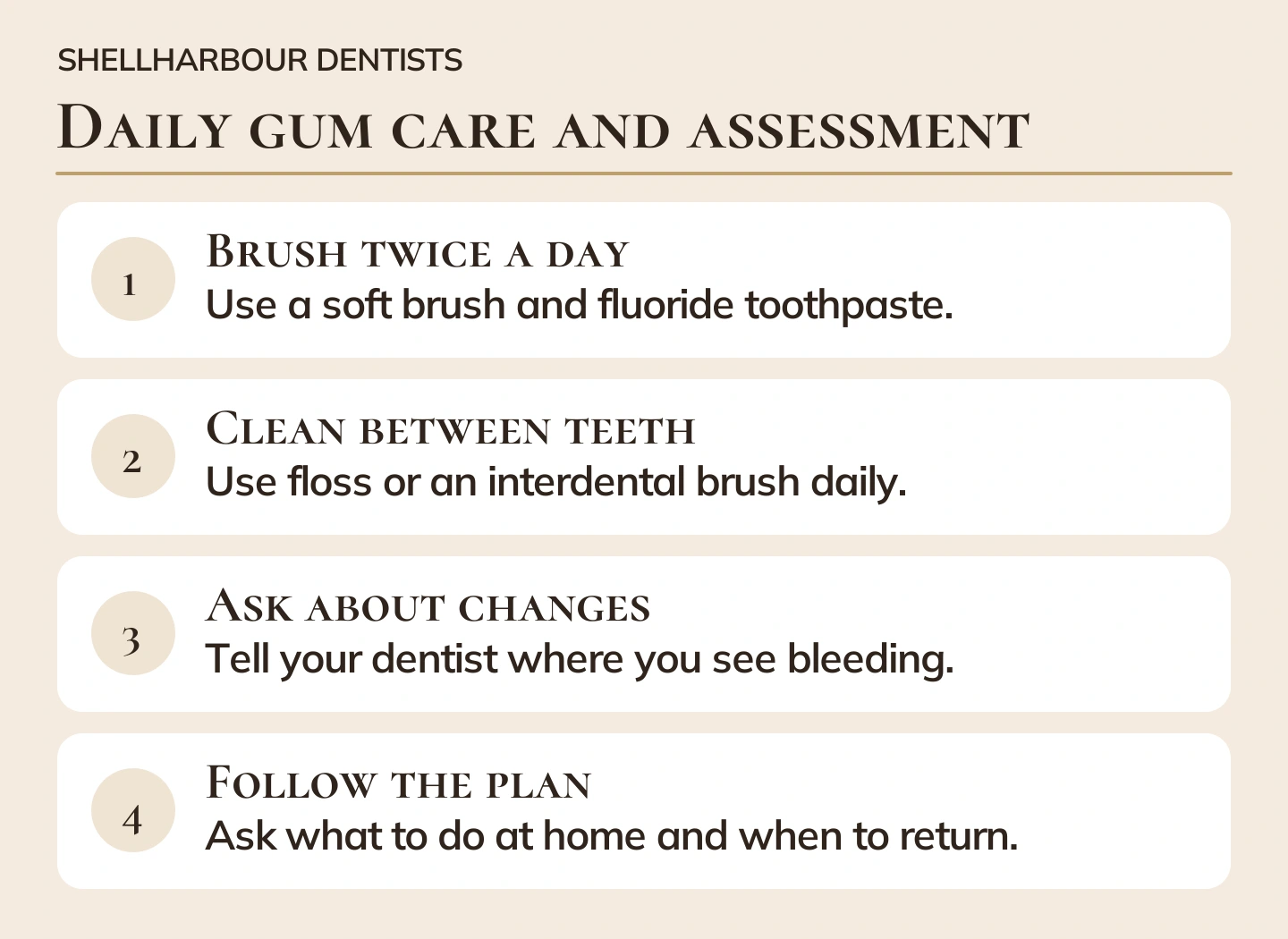
- Brush morning and night. Use a soft toothbrush and fluoride toothpaste. Move the brush gently along the gum edge and work around the outside, inside and chewing surfaces of your teeth.
- Clean between teeth daily. Use floss or a brush sized for the space, depending on what your dentist recommends. If you are unsure about how to reach a spot that keeps bleeding, ask the dental team to show you.
- Keep cleaning gently while you arrange a check. Tell the dental team where the bleeding or swelling occurs, when you first saw it and whether you have noticed loose teeth, changes in your bite or an unpleasant taste.
- At the assessment, ask what your dentist found, whether there is calculus to remove and how you should clean the affected area at home. If further care is suggested, ask what will be reviewed and when.
Some people wonder whether to wait for an inflamed area to settle on its own. If you keep seeing swelling or blood, arrange a check so the dentist can find the cause. Healthdirect advises continuing to brush and clean between teeth even if the gums are inflamed. It also advises seeing a dentist if you notice symptoms or suspect hardened plaque. Avoid scraping deposits yourself.
If cleaning between your teeth is difficult, bring the floss or brush you use to your appointment and ask the dentist to demonstrate the technique in the area that concerns you. If you wear a removable denture, ask about cleaning it as well as the natural teeth around it. Better Health Channel explains that plaque can collect on dentures and that the tool you use between teeth can be tailored to your mouth.
What a gum assessment can tell you
A gum assessment starts with what you have noticed. At Shellharbour Dentists the dentist checks the teeth and gums for bleeding, swelling and recession. They may measure the space where the gum meets the tooth and suggest X-rays if they need more information about the bone supporting your teeth. Our gum disease treatment page explains how the findings can guide your care.
Ask whether the findings point to inflammation limited to the gums or whether there are signs of deeper support loss. If a professional clean is recommended, ask which areas need attention and which tools to use at home. If deeper periodontal care is suggested, ask how many appointments may be needed and when the dentist would review the response. Our clinic also has information on a routine check-up and clean.
Call promptly for advice if you have worsening dental pain, facial swelling or pus around a tooth. These can occur with a dental abscess. If you are having difficulty breathing, call triple zero (000). Healthdirect's dental abscess guidance explains which symptoms need urgent care.
Where to ask about gum care in Shellharbour
Shellharbour Dentists is in Centre Health Medical Centre in Barrack Heights. Use the clinic contact page or call (02) 4214 4551 to ask about a gum assessment. When you call, describe what has changed, when you first noticed it and whether an area hurts or feels loose.
If access to private dental care is a concern, check the Illawarra Shoalhaven Local Health District public dental eligibility page. The district lists eligibility for adult residents with a current Medicare card and an accepted concession card. Call its customer service centre on 1800 679 336 to check eligibility and ask how the service handles your symptoms.
Frequently asked questions
What does stage 1 gingivitis look like?
The gum edge can look red or swollen, and it may bleed when you brush, clean between your teeth or eat. An unpleasant taste or tenderness can occur. A dentist can check whether these changes are from gingivitis.
Will an inflamed gum heal itself?
That depends on the cause. If plaque is irritating the gum, daily cleaning helps remove soft plaque. A dental professional can remove hardened calculus. Arrange a check if you notice swelling or bleeding so a dentist can assess the cause.
Can I have gingivitis if my gums feel comfortable?
Yes. Early gum inflammation may cause little discomfort. Bleeding or swelling is worth discussing with a dentist even when the area feels comfortable.
How can I tell if it is gingivitis or periodontitis?
A dentist checks the gums and the tissues that support the teeth. The assessment may include measuring the spaces around the teeth and taking X-rays when needed. Swelling and bleeding can occur with either condition.
Is stage 1 periodontitis the same as gingivitis?
Gingivitis affects the gum tissue. Stage 1 periodontitis refers to an early stage of disease involving damage to the tissues that support teeth. A dental examination can distinguish the two.
Should I stop brushing an area that bleeds?
Keep brushing gently with a soft toothbrush and fluoride toothpaste and keep cleaning between your teeth. Ask a dentist to check the area and show you how to clean it if you are unsure.
When should I book a gum check in Shellharbour?
Contact a dentist if you notice bleeding, swelling, a change in the gum edge or a loose tooth. Ask for prompt advice if you have facial swelling or worsening dental pain.
This article provides general dental information. A dental examination is needed for advice about your gums and any treatment you may need.