Treatment Planning
New braces: what the first weeks feel like and how to care for them
Just had fixed braces fitted? What soreness to expect, how to clean around brackets, which foods to avoid and when to call your treating dental team.
16 November 2026
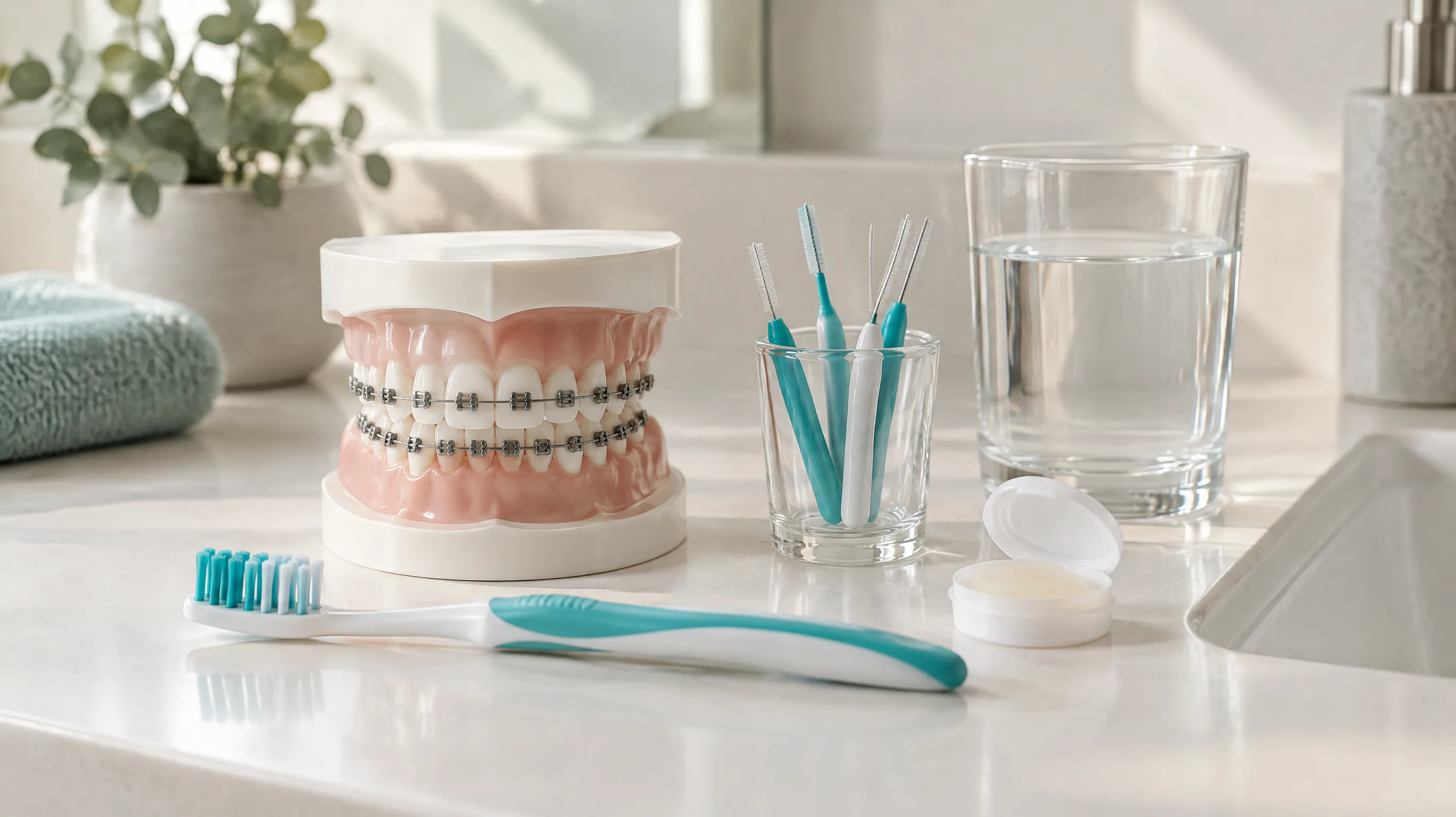
The first weeks with new braces are mostly about getting used to them: some soreness, a new way of brushing and a few foods to set aside for now. Our traditional braces information notes that mild soreness can occur after braces are fitted or adjusted, and that soft foods and orthodontic wax may help. Your treating team's instructions come first, because they know how your braces were set up.
This guide is for people who already have fixed braces, or a family member with them. It does not decide whether braces suit you. That needs an assessment, which our orthodontics in Shellharbour page explains.
Is it normal for my teeth to feel sore?
Mild soreness is common after braces are fitted and after each adjustment. Better Health Channel explains that when the wire is tied into the brackets, it places constant gentle pressure on the teeth, which is what moves them. Our braces page suggests soft foods while your teeth feel tender, and asking your dentist or pharmacist about suitable pain relief.
Soreness that is severe or does not settle is different. Our braces page advises contacting your treating dental team promptly for severe or ongoing pain.
What if a bracket or wire rubs my cheek?
Brackets and wires can be sharp and poke the gums, cheeks, lips or tongue. Better Health Channel's orthodontic treatment guide says sharp areas can be covered with special orthodontic wax to help prevent injury. Ask your team to show you how to use it before you leave the appointment.
A sharp wire or a loose bracket needs a call, not a home repair. Our braces page lists both as reasons to contact your treating dental team promptly.
How do I clean around brackets and wires?
Cleaning matters more with braces. Better Health Channel explains that brackets and wires trap more food and plaque, which raises the chance of gum disease, tooth decay and stains. It advises cleaning your teeth thoroughly at least twice a day, ideally after every meal, with a fluoride toothpaste.
Special orthodontic toothbrushes and small interdental brushes that fit around brackets, wires and between teeth can make this easier, according to Better Health Channel. Ask your dental team to show you which brushes suit your braces. Our small routines for oral health article covers everyday habits that still apply.
Which foods should I avoid with braces?
Better Health Channel advises avoiding sticky or hard foods during orthodontic treatment, such as chewing gum, lollies and crusty bread, because they can get stuck on braces and cause damage. It also advises avoiding high-sugar foods and drinks, including fruit juice, and limiting snacking during treatment.
Our braces page suggests asking your dentist which foods to avoid with your braces, and why. If something you eat often is on the list, ask about alternatives at your next review.
How often will I need appointments?
That depends on your teeth and the movements planned. Our braces page says the active treatment period and adjustment schedule are individual, so ask for an estimate and how often you will need reviews. Keep attending check-ups as advised: our check-up and clean page explains what a routine visit covers.
What happens after the braces come off?
Teeth can move once braces are removed. Better Health Channel and our braces page both explain that a fixed or removable retainer helps hold their position. Follow the wear and cleaning instructions you are given, and contact the team if a retainer loosens, breaks or is lost. Our braces page notes retainers may be needed long term, so ask about this early.
When should I call the clinic?
Contact your treating dental team promptly for severe or ongoing pain, a sharp wire or a loose bracket. For pain, a swollen face or a damaged tooth, see our emergency dentist in Shellharbour page.
Call (02) 4216 9911 or use our Shellharbour contact details to ask about a braces concern or an assessment. You can read Dr Mohit Tolani’s dentist profile before arranging a visit.
Sources and image
Sources checked 16 November 2026. This is general patient information about living with fixed braces, not a diagnosis, individual care instructions or a statement about how your treatment will progress. Your treating dentist or orthodontist's advice applies to your braces.
Better Health Channel, Victorian Department of Health: Orthodontic treatment, reviewed December 2025 — how fixed braces work, risks, cleaning, foods to avoid and retainers.
Shellharbour Dentists: Traditional braces, team and contact — clinic information about soreness, wax, reviews, retainers, when to call, author identity and contact details.